The useful first question is whether every brake feels weak or one wheel is not contributing. A whole-trailer problem points toward controller setup, common wiring or widespread adjustment. One quiet or cool wheel points toward that wheel's wire, magnet or mechanical brake.
Make sure the controller and trailer agree
- Confirm the controller is set for electric brakes, not electric-over-hydraulic.
- Check for no-trailer, open-ground, overload or short messages before changing gain.
- Load the trailer as it will travel, then use the controller maker's setup procedure in a safe, traffic-free area.
- Confirm the manual lever applies trailer braking. If manual braking works but pedal braking does not, investigate controller stop input, proportional behavior and setup.
Do not copy someone else's gain number. Trailer load, controller type, brake condition and tow vehicle all change the correct setting.
High gain does not overcome voltage drop
Inspect the seven-way connector for corrosion, moisture, heat, loose contacts and pushed-back terminals. Check the common ground and brake-output wiring. Lights working normally do not prove the brake circuit can carry magnet current under load.
Expected current depends on brake size and number of magnets. Dexter's technical FAQ gives approximate values for its products, but the exact axle and brake manual must supply the number for your RV. A trained person should measure total and individual current while the system is commanded, using equipment rated for the circuit.
Adjustment is often the missing piece
Manual-adjust brakes become weak as the shoes move farther from the drum. Dexter recommends adjusting its manual-adjust brakes after the first 200 miles, at 3,000-mile intervals and whenever use or performance requires. Other manufacturers and brake types may specify different procedures.
Forward self-adjusting brakes still require correct initial installation and inspection. Confirm what is actually on the axle; replacement work can leave a trailer with a mixture of brake designs or service histories.
New brakes may need burnishing
New shoes and drums do not always deliver full friction immediately. Dexter says replacement shoes and magnets may require many controlled stops to complete burnishing. Follow the installed brake maker's exact procedure. Random hard stops can overheat parts without seating them correctly.
Look inside when electrical checks pass
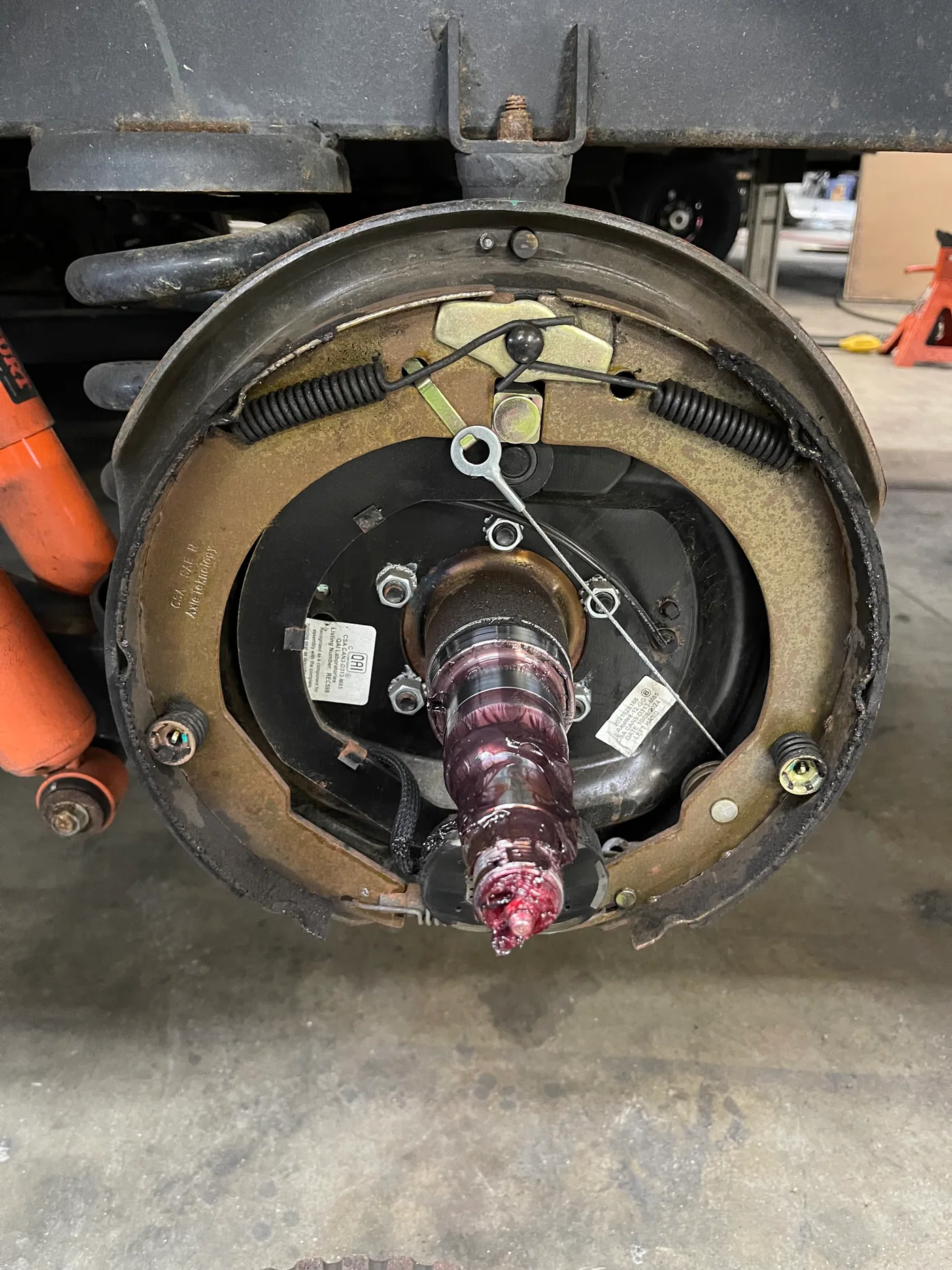
- Grease or oil on the shoes, magnet or drum
- Glazed, worn, loose or deeply cracked lining
- Scored magnet face or armature surface
- Broken, stretched or misplaced springs
- Seized lever or adjuster
- Out-of-round, deeply grooved or heat-damaged drum
Correct the leak or failed seal before replacing friction parts. Do not rely on solvent to restore soaked lining.
If only one wheel is weak
The common controller and connector are at least partly working if the other wheels respond normally. Compare the suspect wheel's local wiring and magnet current with its mate, then inspect adjustment and drum condition. One cold wheel after the same braking event can be as meaningful as one hot wheel.
Avoid these shortcuts
- Do not increase gain until one grabby wheel hides three weak ones.
- Do not install a larger fuse or circuit breaker.
- Do not ground every magnet through rusty frame joints when the brake maker calls for a dedicated common ground.
- Do not assume a hum proves mechanical braking.
- Do not use the breakaway pin as a routine parking brake or gain test.
FAQ
Why are my brakes still weak at maximum gain?
Maximum command cannot fix voltage drop, wrong controller mode, excessive adjustment clearance, worn magnets, contaminated linings or incomplete burnishing.
Do the wheels have to lock during setup?
No. Dexter notes that load, brake type and tire size affect lockup. Stable stopping is the goal; follow the controller instructions.
Could all four brakes be out of adjustment?
Yes, especially when manual-adjust brakes share the same mileage and service history. Inspect all wheel positions rather than correcting only the easiest one to reach.
Related brake help
- Complete electric trailer-brake guide
- Electric trailer brakes not working
- Controller says no trailer connected
- One trailer wheel is hot
Sources and review notes
Reviewed July 18, 2026. Use the exact controller and axle manuals for gain setup, current, adjustment, burnishing and wear limits.
Are all wheels weak or only one?
The guided towing diagnosis takes the answer down two different paths.
Start brake diagnosisFind trailer service