Leveling systems can be hydraulic, electric, automatic, semi-automatic, motorhome-style or fifth-wheel landing/leveling systems. The safe checks are similar, but override procedures are not. Use the exact system manual whenever you reach valves, retract modes or manual operation.
1. Start with battery voltage
Leveling pumps and electric jacks draw heavy current. Low voltage is one of the most common causes of slow, partial or failed retraction. Check the house battery and chassis battery requirements for your system. Plugging into shore power helps only if the correct battery path is charging and connections are clean.
2. Look for stuck footpads and ground load
Jacks can stick to soft ground, mud, asphalt, ice or blocks. Remove load only as the manual allows. Never crawl under the RV or place hands near a jack foot while someone operates the system. If a pad is frozen or buried, work around it carefully rather than forcing the leg.
3. Read control-panel messages
Auto-level systems often display errors for low voltage, excess slope, jack timeout, retract failure or sensor problems. Photograph the screen before clearing codes. A reset without the code can erase the clue you needed.
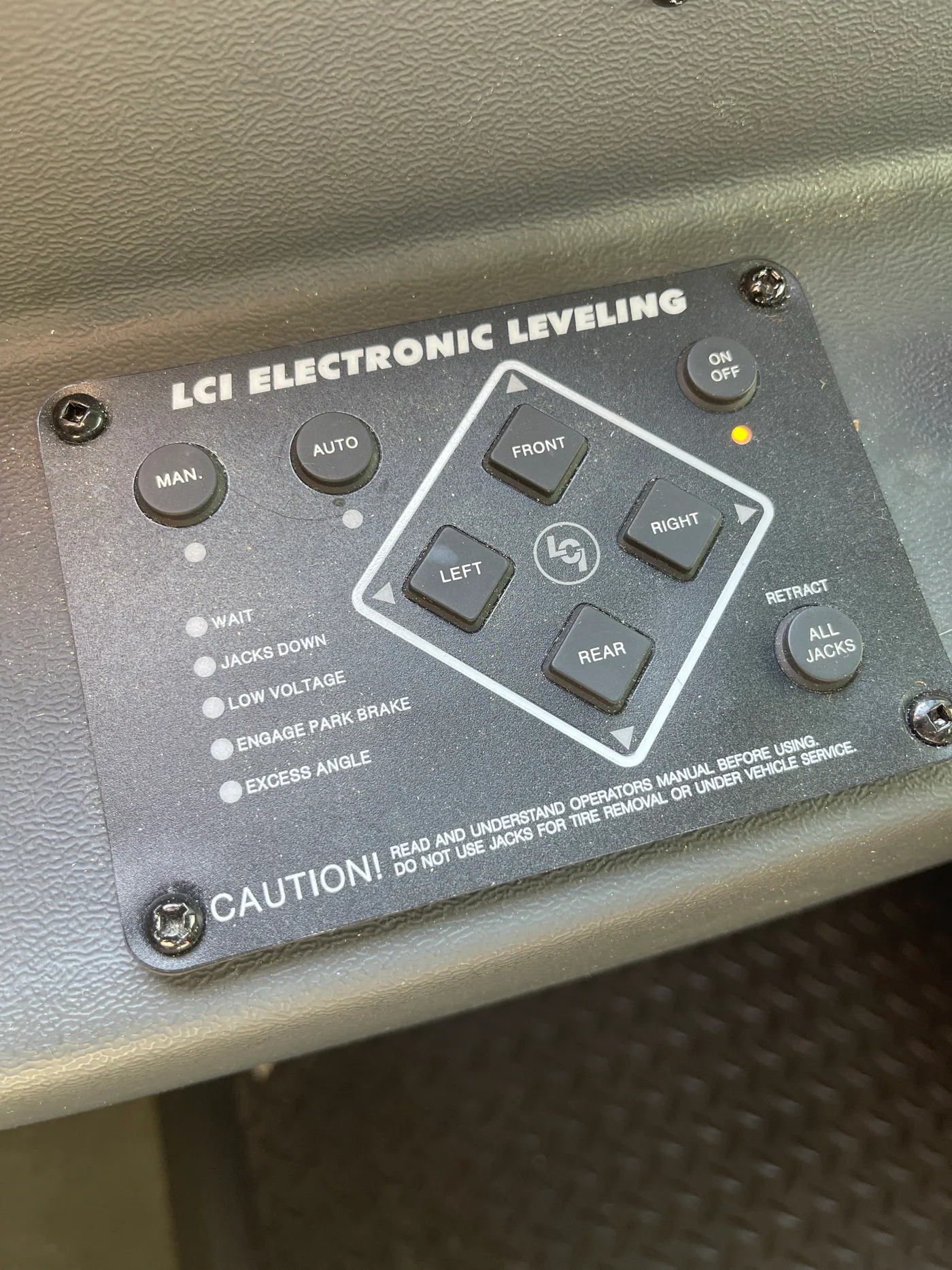
4. Check fuses, breakers and battery disconnects
Find the system fuse, high-current breaker and power feed. A tripped breaker near the battery can leave the panel alive but the pump unable to run. Hot cables, melted insulation or repeated breaker trips mean the circuit needs service.
5. For hydraulic systems
Listen for the pump. No pump sound points toward power, solenoid, motor, panel or interlock issues. Pump sound with no movement can point toward valves, fluid, load, pump output or a stuck leg. Fluid level checks must follow the manual, often with jacks retracted, and overfilling can create leaks or overflow.
6. For electric jacks
Listen for motor operation. Clicking, slow movement or one jack lagging can indicate low voltage, bad ground, controller faults, motor load or mechanical binding. Do not keep running a stalled electric jack; it can overheat the motor or damage gears.
7. Manual retract is the last step, not the first
Manual valves, motor releases and override tools vary. Follow the installed system instructions exactly and verify the jacks are secured for travel afterward. If a leg is bent, leaking or mechanically jammed, forcing manual retract can make damage worse.
Do not travel until every jack is fully up and secure
A leveling jack that is partly extended is a travel hazard. It can strike the road, bend brackets, damage hydraulic lines or create a loss-of-control situation. If a jack will not retract, slow down and diagnose the system instead of repeatedly pressing retract until the motor or pump overheats.
Retraction clue table
| Symptom | Likely area | First check |
|---|---|---|
| Panel dead | 12V power, fuse or ignition interlock | Battery voltage and controller fuse |
| Pump runs but jack stays down | Hydraulic valve, fluid or mechanical binding | Leaks, manual valve and battery voltage |
| One jack slow | Dirty leg, spring/return issue or binding | Clean exposed shaft and inspect footpad |
| Low-voltage error | Battery or ground path | Voltage while retracting |
Voltage matters even when retracting
Hydraulic pumps and electric jacks draw heavy current. A weak battery or poor ground can cause control errors, slow movement or incomplete retraction. Measure voltage while the pump or jack motor is operating. If voltage drops sharply, solve the battery and cable path before assuming the jack is stuck.
Look for mechanical and environmental causes
Footpads can sink into mud, freeze to the ground, catch on blocks or bind on uneven surfaces. Exposed jack shafts can collect dirt. Clean only according to the system manual and do not crawl under an RV supported only by leveling jacks. If the RV shifted or the jack is side-loaded, forcing retraction can bend parts.
Manual override should follow the exact system manual
Hydraulic and electric leveling systems use different release procedures. Some use valves, some use drill adapters, and some require a specific controller sequence. Opening the wrong valve or running the wrong motor can drop the coach or damage the pump. If the manual is missing, use the model number on the controller or pump assembly before attempting an override.
Related leveling and slide pages
- RV leveling jacks troubleshooting guide
- RV slide-out stuck out
- RV battery not charging on shore power
- RV breaker trips when plugged in
- Find RV service
FAQ
Why do my jacks retract slowly?
Low voltage, weak batteries, poor grounds, cold hydraulic fluid, dirty/bent jack legs or a failing pump/motor can all slow retraction.
Can low hydraulic fluid stop retraction?
It can affect operation, but check level only by the manual's procedure. Many systems specify a jack position for accurate level checks.
Should I use the auto retract button repeatedly?
No. If auto retract fails, read the error, check voltage and obstruction, then follow the manual. Repeated attempts can overheat components.
Need professional hands?
Leveling systems combine heavy loads, high current and sometimes hydraulics. Mobile service is the right call when the jacks will not travel safely.
Find RV serviceRead leveling guideHydraulic versus electric retraction clues
Hydraulic systems often share a pump, reservoir, valves and cylinders. Electric systems usually have individual motors or gearboxes. If every jack acts up, think battery voltage, controller, pump or common power path. If one jack acts up, think binding, footpad load, cylinder/leg condition or a local motor/gear issue.
Low fluid deserves a leak search
If a hydraulic reservoir is low, do not simply top it off and move on. Look for fresh fluid at hose fittings, cylinder rods, pump manifold and under the RV. Check fluid only in the position specified by the manual. Many systems are checked with jacks retracted; checking in the wrong position can overfill the reservoir and create a mess or malfunction.
What to do if travel is urgent
If a jack will not retract and travel is necessary, use the exact emergency retraction procedure and then verify the jack is physically secure. A dashboard light going out is not enough. Visually confirm every jack is up, blocks are removed, footpads are clear and nothing can drop during travel.
More model-specific help
Sources and review notes
Follow the installed leveling-system manual for retract, override, fluid and calibration procedures. Lippert maintains official resources in its leveling and stabilization support library.