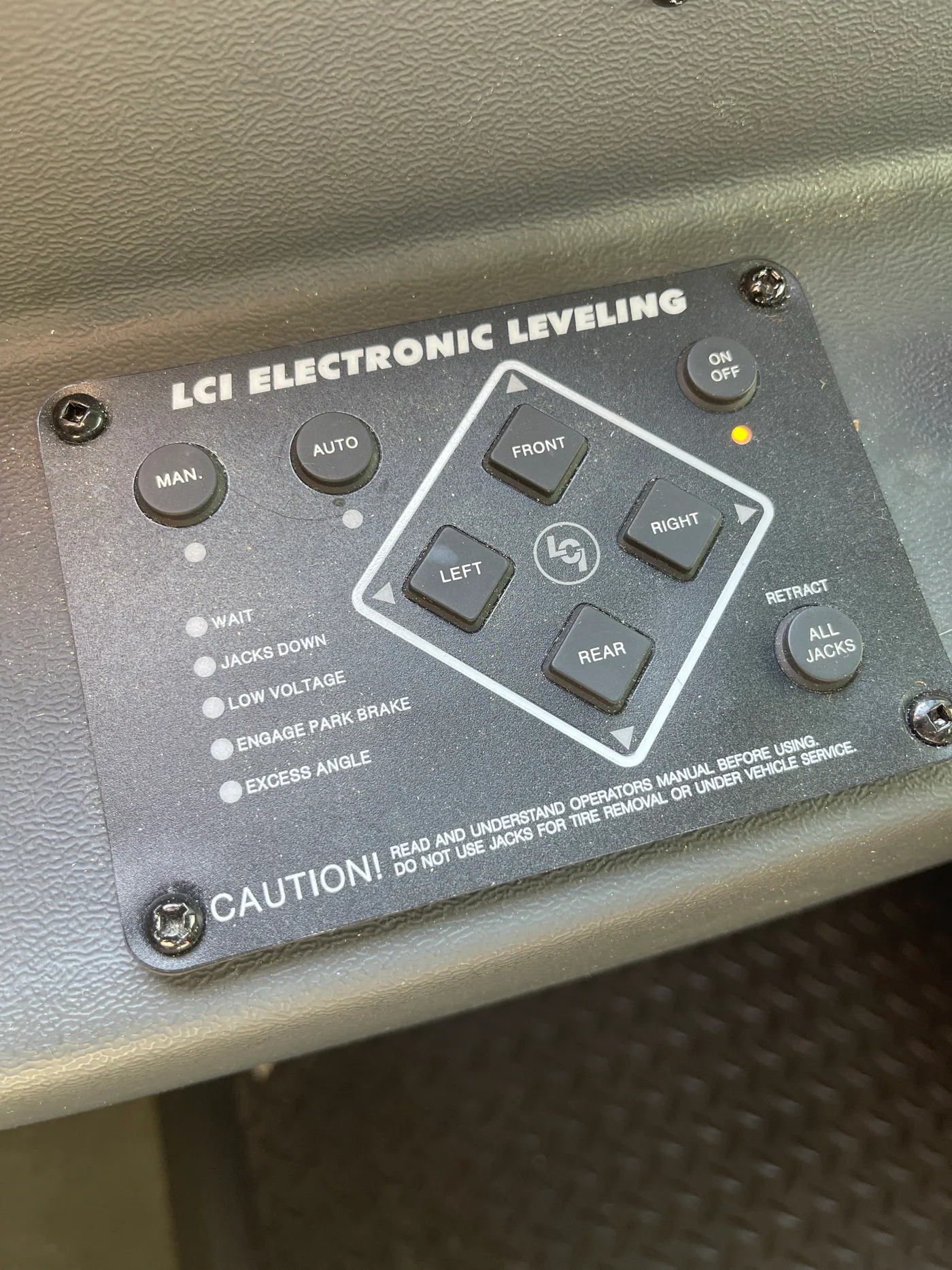
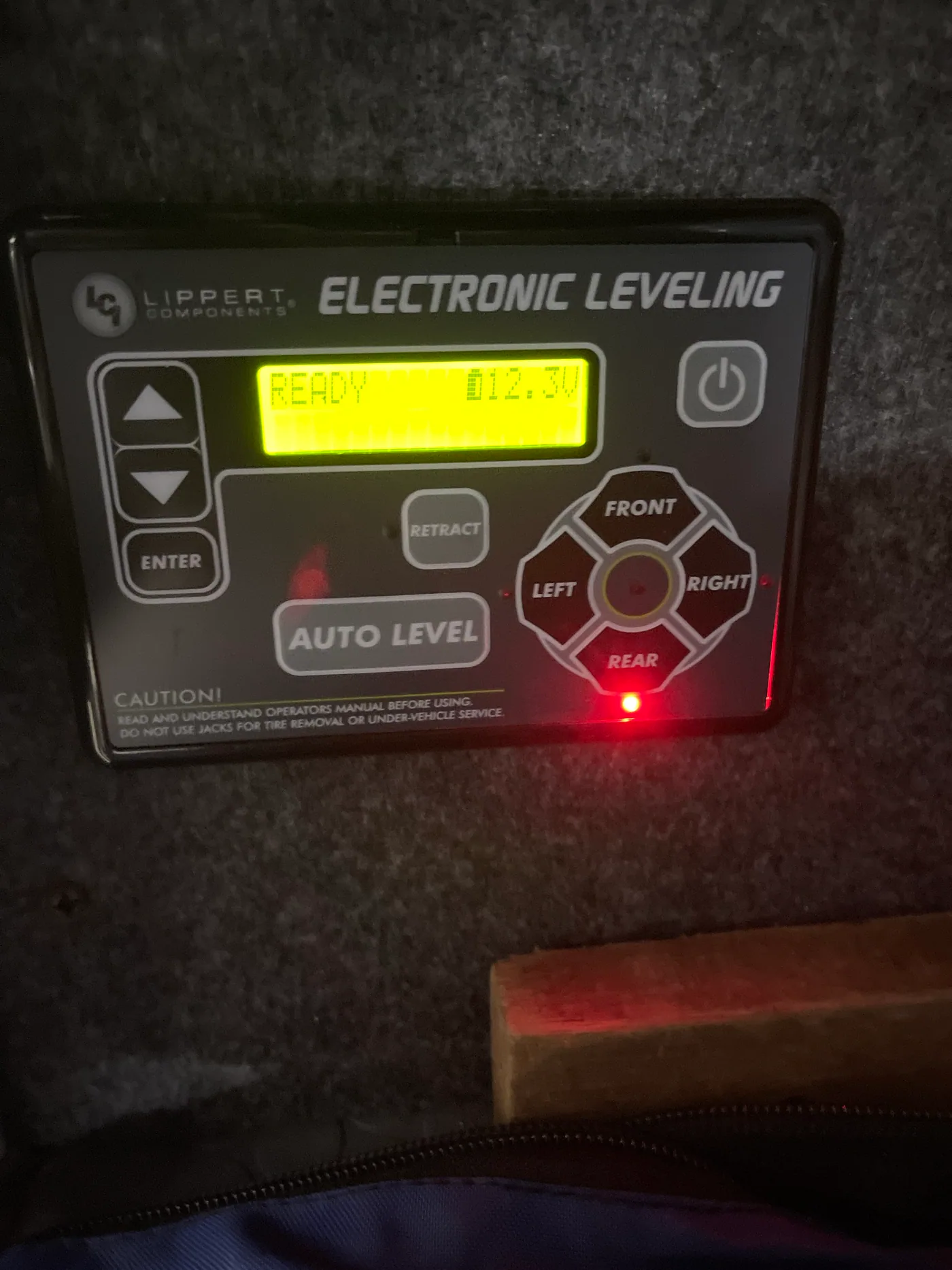
Before pressing buttons repeatedly, photograph the controller, the equipment label and every error message. “Lippert,” “LCI” or “Power Gear” on the panel is not always enough to identify the generation. Ground Control electric systems and Power Gear hydraulic systems use different motors, valves, sensors and emergency procedures.
Start with the symptom pattern
- Nothing responds: suspect a shared battery, disconnect, breaker, fuse, ground, ignition/parking-brake interlock or controller supply.
- The panel works but reports low voltage: test voltage while a jack or pump is commanded, not only with the system resting.
- The motor or pump runs but no jack moves: stop before overheating it; look for a hydraulic valve/fluid problem or an electric drive that is disconnected or bound.
- Only one jack fails: compare that leg's wire, hose, motor, valve, spring, rod and footpad with a working leg.
- Manual movement works but auto-level fails: investigate setup, zero-point calibration, slope, ground contact and sensor/controller errors.
Test the 12-volt supply under load
Leveling motors and hydraulic pumps are high-current loads. Interior lights can look normal while voltage collapses at the leveling controller. If the jacks work only when the RV is plugged into shore power, the converter may be masking a weak battery or a poor battery-side connection.
- Verify the battery disconnect is in its normal use position and the battery terminals are clean and tight.
- Record resting battery voltage, then watch the reading while a helper briefly commands the affected function.
- Compare voltage at the battery with voltage at the leveling-system input if that test is accessible and you are qualified to make it.
- Inspect the system's high-current breaker or fuse and main ground for looseness, corrosion, heat discoloration or an open resettable breaker.
- Stop a test if a cable, fuse holder, solenoid or motor becomes hot, chatters or smells burned.
A large drop at the battery points toward battery condition or charging. A much larger drop at the controller than at the battery points toward cable, breaker, solenoid or ground resistance. Do not bypass protection or jump an unidentified solenoid.
If the system is hydraulic
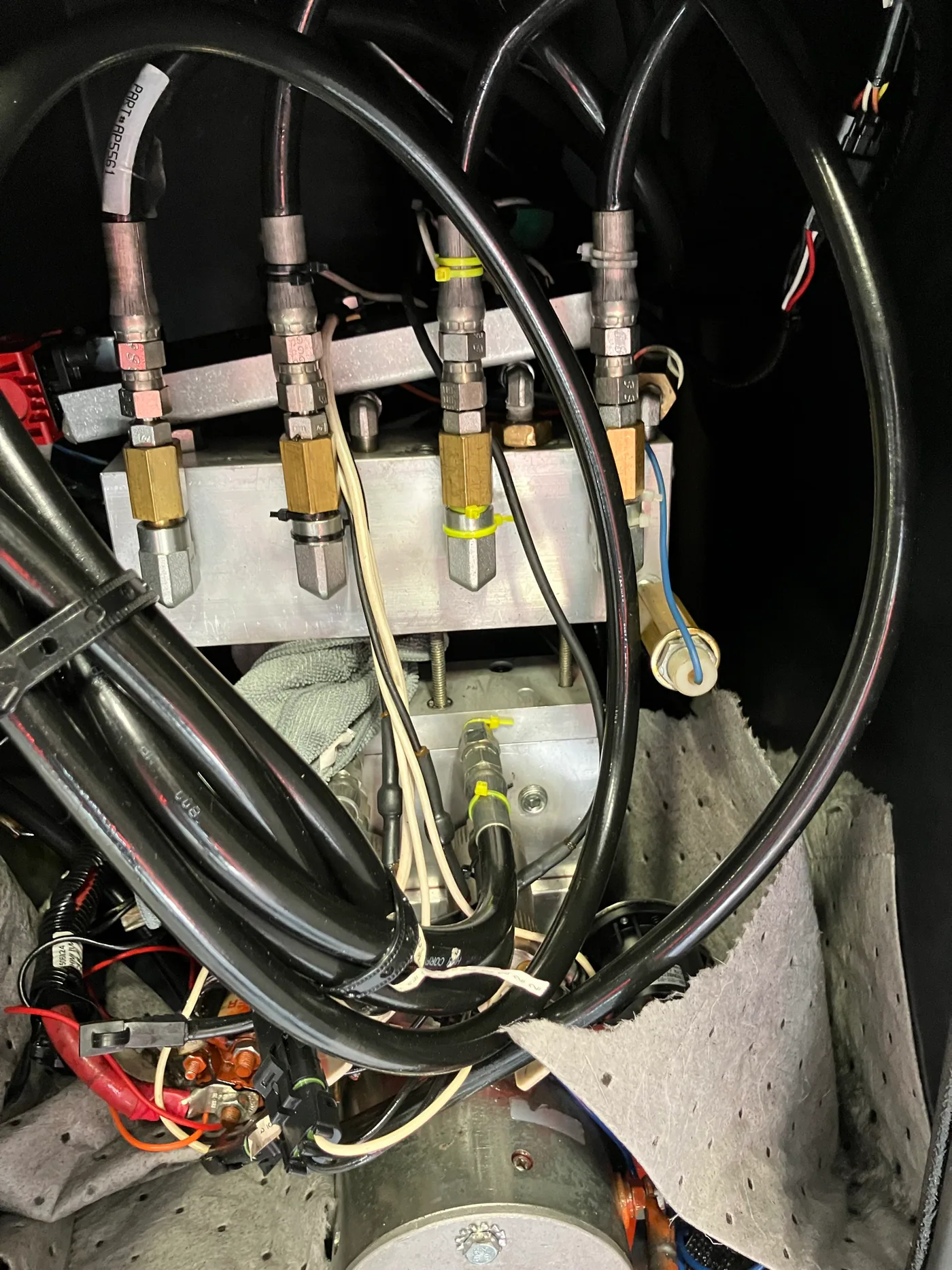
A hydraulic system normally has a reservoir, electric pump motor, manifold, valves and hoses leading to the jacks. Some jacks power both directions; others retract with springs. That difference changes the diagnosis.
- Pump silent: return to battery power, breaker, solenoid, ground, controller command and required vehicle interlocks.
- Pump runs, no jacks move: release the control after a short test. Check for very low fluid, a manual valve left open, a dump/retract valve problem or a pump that is not building useful pressure.
- All jacks extend but will not retract: a shared retract/dump command, valve, fluid or control problem is more likely than several failed cylinders.
- One jack leaks down or will not retract: focus on that hose, valve/coil, cylinder, return spring and mechanical condition.
Check fluid only in the position specified by the manual—often, but not always, with jacks retracted. Adding fluid with cylinders extended can make the reservoir overflow later. If fluid is low, find the leak before treating the level as routine maintenance.
If each jack is electric
Electric leveling systems place a motor and gearbox at each leg. When every leg is dead, look upstream. When three legs work and one does not, compare the failed leg with a working one.
Inspect the footpad for soft ground, ice or an object trapping it. Look for a bent tube, damaged harness, loose motor connector or a leg that is visibly side-loaded. A click may be a relay or brake release without motor rotation; a hum may be a stalled motor. Do not hold the button against a stalled leg because wiring and motor windings can overheat.
Manual mode works but auto-level fails
That result proves more than it may seem. It shows that at least some motors, valves and power paths can operate. Focus next on controller errors, zero-point setup, slope and the conditions required before auto-level will begin.
- Move to reasonably firm, level ground and use pads where the manufacturer permits them.
- Confirm the tow vehicle, ignition, transmission and parking-brake conditions required by the installed system.
- Record the exact error before clearing it.
- Check that no jack is already near the end of its travel before auto-level starts.
- Recalibrate zero point only with the instructions for that exact controller. Calibration is not a cure for a bent leg, weak battery or out-of-stroke condition.
A jack will not retract
Do not move the RV to “help” the jack. Chock the wheels, clear the area and decide whether the failure affects every jack or one leg. Try the normal all-retract and model-approved manual controls once after correcting obvious voltage or obstruction problems. If the system provides a manual emergency procedure, follow that exact document; do not copy a drill, valve or socket procedure from a different leveling family.
A physically retracted jack with a jacks-down warning is a separate problem. On some hydraulic systems, fluid level or a retract pressure switch contributes to the warning. On electric systems, a leg position or control signal may remain wrong. Visually verify every foot before diagnosing the warning, and do not defeat the alarm just to travel.
What the result tells you
- Works with charger support only: battery or high-resistance supply path is likely.
- Every jack shares the failure: look for common power, control, interlock, pump or manifold causes.
- One jack alone fails: look at that leg's dedicated components.
- Manual works, automatic does not: investigate setup, sensor, slope and calibration rather than replacing all drive parts.
- Fresh hydraulic fluid appears: stop operating the system and repair the leak before relying on the jacks.
Frequently asked questions
Why do the jacks work on shore power but not on battery?
The converter may be supporting a weak battery or poor battery connection while plugged in. Measure voltage during jack operation at the battery and, where safe, at the leveling supply.
Why will one jack not retract when the others do?
One stuck leg points toward that jack's wiring, motor, hose, valve, spring, rod or physical side load rather than the shared controller and battery.
Can I travel with a leveling jack partly down?
No. Do not move the RV until every jack is fully retracted or secured by the exact manufacturer emergency procedure.
Continue with the exact symptom
Use a focused page for the symptom and equipment family you have.
When to call a professional
Arrange mobile RV service for a jack that cannot be made travel-safe, a bent leg, hydraulic leakage, burned wiring, a stalled motor, unknown manual-release procedure or an RV that would need to be lifted or supported for access.
Sources and review notes
This guide was materially expanded and safety-reviewed on August 1, 2026. Model-specific procedures should come from the installed equipment manual. Useful primary references include Lippert's Ground Control support library, Power Gear hydraulic leveling support and Power Gear electric leveling support. The control-panel and manifold photos are original RV Solver field images; they illustrate real installations, not a universal wiring or hose layout. See the editorial policy.