Wheel-bearing problems and brake problems overlap. Both can create heat, odor and drag. A grease seal can fail and contaminate the brake. A brake can overheat the hub. The useful question is not simply, “Is the hub hot?” It is, “Why is this wheel position different from the others?”
Start with a safe temperature comparison
At a safe stop, point an infrared thermometer at the same place on every hub. Record the side, recent braking, ambient temperature and whether one side faced direct sun. Do not chase a universal temperature number; trailer load, brake use, hub design and weather change the reading.
| Pattern | What it suggests |
|---|---|
| Every hub similarly warm after braking | Normal braking heat may be present; continue to watch for change |
| One hub clearly hotter | Brake drag, bearing adjustment/damage or local seal trouble |
| Hot tire and sidewall, hub not the main source | Pressure, overload, internal tire damage or rubbing |
| Smoke, burned paint or strong odor | Immediate travel stop and disassembly before reuse |
| One hub unusually cool with weak braking | That wheel brake may not be applying |
External inspection before lifting anything
- Look behind the wheel and brake backing plate for wet grease, oil trails or road dirt stuck to lubricant.
- Check the dust/grease cap for damage, looseness or missing rubber plug.
- Look for metal dust, burned paint, melted wiring and a brake wire rubbing the suspension.
- Inspect the tire for low pressure, bulges, exposed cords, unusual wear or contact with the wheel well.
- Listen for grinding, growling, scraping or clicking while the trailer moves only if it can be tested safely.
Dexter's towable-RV inspection guidance says the backs of hubs and brakes should be dry. Visible grease or fluid is not routine seepage to ignore; it is a reason to locate the source.
Wheel play and rotation checks
Use the RV and axle instructions for lifting and approved support points. With the frame secured on rated stands, check the wheel for abnormal play and rotate it slowly. A slight brake-lining drag can be normal after correct adjustment; roughness, grinding, a notch, a clunk or excessive looseness is not.
What proper hub disassembly examines
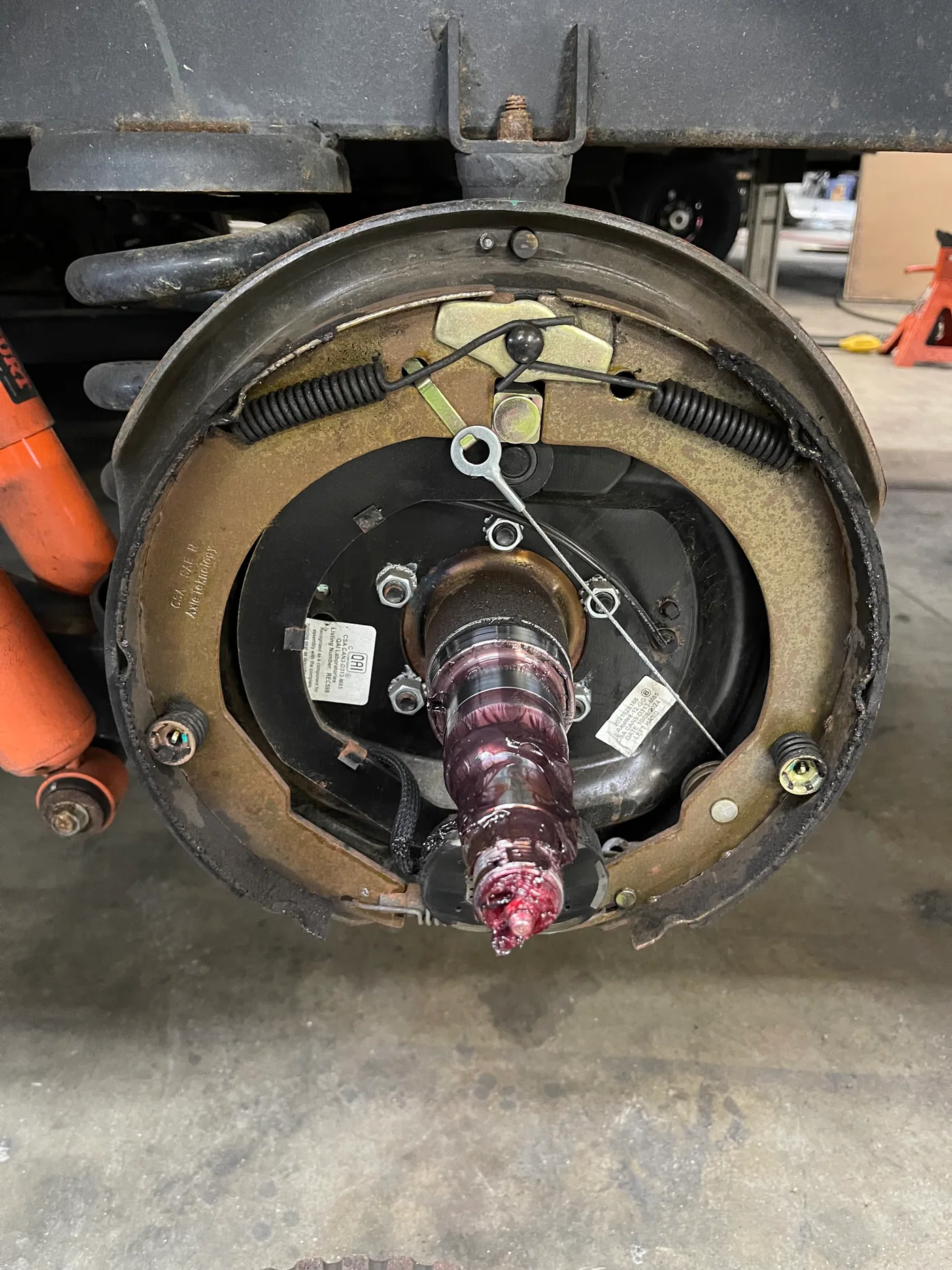
After the wheel and hub/drum are removed by the service manual, inspect the complete stack rather than only adding grease:
- Outer and inner bearings: rollers and cages for pitting, scoring, discoloration, cracks or roughness.
- Bearing races: polished tracks for pits, spalling, grooves, heat color or looseness in the hub.
- Spindle: bearing and seal surfaces for scoring, heat damage, wear or transferred metal.
- Grease seal: damaged lip, hardening, incorrect size, crooked installation or wear at the spindle surface.
- Lubricant: water, grit, metal, mixed products or evidence that grease bypassed the seal.
- Brake assembly: contaminated shoes, damaged springs, scored magnet/drum, adjustment and wiring.
Cleaning, inspection and replacement decisions
Bearing service is more than wiping off the outside. Bearings and races are cleaned by the axle maker's procedure, dried without spinning them with compressed air, then examined under good light. A questionable bearing is replaced with its matching race. A heat-damaged or scored spindle needs professional measurement and may require axle work.
Replace the grease seal whenever the manual requires it, especially after hub removal on systems that rely on the seal to direct lubricant. Do not reuse a seal simply because its lip looks intact from the outside.
E-Z Lube and similar grease fittings
Dexter's E-Z Lube spindle routes grease to the inner bearing and back toward the outer bearing. It is a lubrication feature, not a sealed-for-life bearing or a substitute for inspection. Dexter says E-Z Lube-equipped axles remain subject to the service manual's brake, hub, bearing, seal, wheel and tire procedures.
Use the grease specification and application method for the axle. Dexter warns against pneumatic grease guns because fast injection can force grease past or dislodge a seal. It also warns that if an E-Z Lube hub has been removed, the seal must be replaced before lubrication to reduce the chance of grease reaching the brake lining.
Grease on the brake changes the repair
Once lubricant reaches the drum and friction lining, the job is no longer “repack the bearings.” Correct the seal or lubrication cause, inspect the bearings and drum, and replace contaminated shoes or the brake assembly as the brake maker requires. Do not depend on solvent to restore oil- or grease-soaked lining.
If one wheel has a seal failure, inspect the others soon. They share age, load and service history even if they have not leaked yet.
Reassembly is where many failures begin
- Pack bearings with the specified compatible grease.
- Install the correct new seal squarely and protect its lip.
- Set spindle-nut adjustment exactly as the axle manual describes; do not substitute a generic torque.
- Confirm the retainer, cap and plug are fully installed.
- Adjust manual-adjust brakes by their procedure.
- Torque wheels in the specified pattern and repeat checks on the RV maker's schedule.
After service, perform a cautious test away from traffic, verify braking and compare every hub again. Stop if the repaired wheel separates from the group in temperature, noise or drag.
Service timing
Use the interval for the exact axle and operating conditions. Water immersion, long storage, contamination, high mileage and a previous overheat event can shorten the interval. Dexter's current inspection guidance includes annual bearing inspection and service as part of a professional running-gear inspection. A fitting full of fresh grease does not document bearing condition.
FAQ
How hot is too hot for an RV trailer hub?
There is no universal number that clears every hub. One wheel much hotter than its peers—or any heat with smoke, odor, grinding, looseness or changed braking—needs inspection.
Can a dragging electric brake heat the wheel bearing?
It heats the drum and hub around the bearing, so the same wheel position can become hot. Inspect brake and bearing together rather than guessing from the thermometer.
Does pumping grease into an E-Z Lube fitting repack the bearing?
It routes grease through the spindle and bearings when used correctly, but it does not inspect rollers, races, spindle, seal or brake parts. Scheduled disassembly and inspection still apply.
Related running-gear help
- Why one trailer wheel is hot
- Dexter E-Z Lube grease on brakes
- Electric trailer brake troubleshooting guide
- RV tire blowout prevention
- Trailer tire pressure guide
- RV tire load calculator
Sources and review notes
Reviewed July 18, 2026. Bearing part numbers, grease type, seal, spindle-nut adjustment, brake adjustment, service interval and wheel torque must be confirmed for the exact axle and RV.
Is it the bearing, brake or tire?
Use the towing troubleshooter to record the temperature pattern, noise, leakage and braking clues before service begins.
Start hot-hub diagnosisFind trailer service