An Onan generator that cranks hard, loses power or makes extra valve noise does not automatically need an adjustment. Stale fuel, a restricted carburetor, weak ignition, low battery voltage, a dirty air filter and excessive load can produce similar complaints. Valve lash belongs on the list when the maintenance interval is due, compression is suspect, or the symptom remains after the basic systems check out.
What valve lash is—and why it changes
Valve lash is the small clearance in the valvetrain when a valve is fully closed. It allows the parts to expand as the engine warms while still letting the valve seat completely. Wear can move that clearance in either direction. Too little clearance can hold a valve slightly open when hot; too much can create noise, impact wear and altered valve motion.
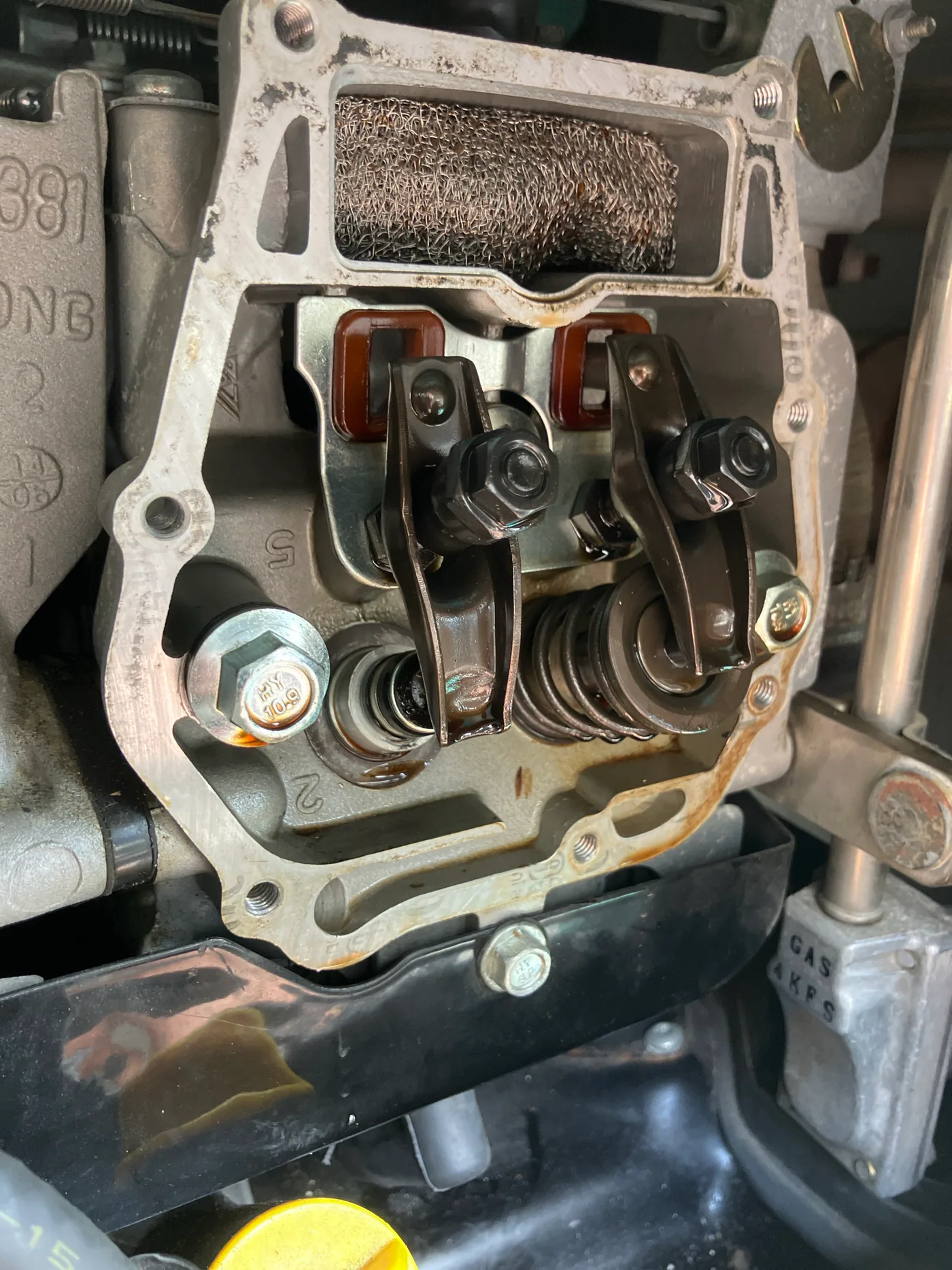
Symptoms that can justify a valve-clearance check
- Hard starting when hot or cold: a valve that does not seal can reduce cranking compression.
- Starts unloaded but struggles with load: reduced cylinder sealing can limit power, although fuel delivery and governor response are more common checks.
- Popping through the intake or exhaust: incorrect lash is one possibility; ignition, mixture and mechanical problems can do the same thing.
- Unusual ticking from the valve-cover area: excessive clearance can be noisy, but a normal mechanical sound should not be diagnosed from volume alone.
- Maintenance history is unknown: the matched operator manual may list a periodic valve-lash check even when the generator seems normal.
Do not use a universal Onan clearance number
Onan is a generator brand, not one engine. Gasoline, LP and diesel families use different engines, procedures and specifications. Even generators with similar green housings can have different spec letters. A clearance copied from a portable inverter generator, a different QG family or an older forum post can be wrong for the engine in front of you.
Record the complete model, spec letter and serial number from the data plate. Use Cummins’ RV generator manual library or serial-specific service information to locate the correct operator and service manual. Confirm whether the procedure calls for a cold engine, which cylinder or timing mark is used, and whether both valves are checked at top dead center on the compression stroke.
What a correct valve-lash service includes
- Verify the complaint first. Record fault codes, cranking behavior and whether the trouble changes with temperature or load.
- Identify the exact generator. Model and spec determine the clearance, access procedure, gasket and torque values.
- Disable every start source. Follow the manual for battery isolation, remote switches and automatic start equipment.
- Set the engine at the specified position. The correct timing position matters because the measured valve must be fully closed.
- Measure with the specified feeler gauge. The gauge should have the drag described by the service procedure; forcing it gives a false reading.
- Adjust and torque exactly. Tightening the locknut can move the setting, so the clearance is checked again afterward.
- Inspect before closing. Look for damaged springs, loose hardware, abnormal wear, oil contamination and a damaged cover gasket. Keep debris out of the engine.
- Run and verify. After reassembly, check for leaks, abnormal noise, stored codes and stable operation under an appropriate load.
Tight valves versus loose valves
| Condition | Possible effect | Why guessing is risky |
|---|---|---|
| Clearance too tight | Loss of sealing as the engine warms, low compression, hard hot start or burned-valve damage | The engine may not sound unusually noisy |
| Clearance too loose | Ticking, impact wear and reduced effective valve motion | Normal mechanical noise varies by engine and enclosure |
| One valve far out of spec | Uneven compression, poor power or popping | A damaged seat, guide or valvetrain part may need more than adjustment |
Tools, difficulty and repair scope
- Difficulty: Advanced engine service. Access may be more difficult than the measurement itself.
- Typical tools: Exact service manual, clean feeler-gauge set, hand tools, small torque wrench, lighting and the model-specific cover gasket or seal.
- Before buying parts: Confirm the complete model/spec and inspect the existing gasket, fasteners and access path.
- Cost range: Labor varies sharply with generator access. A slide-out or removable generator installation can take far longer than a serviceable side compartment.
When this should go to an Onan service technician
Get qualified help if the data plate is missing, the correct service manual cannot be confirmed, automatic-start wiring cannot be safely disabled, access requires removing the generator, or the valvetrain shows a broken spring, sticking valve, damaged rocker or abnormal metal wear. Valve adjustment will not repair a burned valve or low compression caused by internal damage.
FAQ
Do Onan RV generators need valve adjustments?
Some Onan schedules include a valve-lash inspection or adjustment. Follow the interval for the exact model and spec rather than a general hour number.
What are the symptoms of incorrect Onan generator valve clearance?
Hard starting, reduced power, low compression, popping and abnormal valvetrain noise are possible clues. None of them proves the valves are the cause.
What is the valve clearance on an Onan generator?
There is no universal value. The service manual must match the model and specification letter and must state the measuring temperature and engine position.
Can tight valves make an Onan generator hard to start?
Yes, especially after the engine heats up, because a valve may not fully seat. Check fuel, ignition, battery voltage and fault codes as part of the same diagnosis.
Related Onan diagnosis pages
- Onan 4000 generator will not start
- Onan generator starts then dies
- Onan generator surging
- Onan carburetor problems
- Onan generator code 36
- RV generator troubleshooting guide
Sources and review notes
Reviewed July 13, 2026. Cummins manuals repeatedly make valve-lash intervals and procedures model-specific; some operator manuals place this work with an authorized service center or qualified mechanic.
Still chasing a generator problem?
Use the generator troubleshooter to separate starting, fuel, output, load and shutdown symptoms before replacing parts.
Open generator diagnosisFind RV service