RV refrigerators fall into three broad groups: propane/electric absorption units, 12-volt compressor units and residential 120-volt refrigerators. The correct diagnosis depends on which one you have. Find the data plate or manual before ordering parts.
For an absorption refrigerator, compare energy sources
If it cools on 120V electric but not propane, the sealed cooling unit is capable of working; focus on propane supply, burner ignition, flame sensing and combustion airflow. If it works on propane but not electric, verify the refrigerator receptacle, GFCI, breaker and electric heating element circuit. If neither source cools, check 12V control power, level, ventilation and cooling-unit condition.
Give it time and measure correctly
Absorption refrigerators cool slowly. After startup, allow 12 to 24 hours under suitable conditions before judging performance. Use a refrigerator thermometer in the food compartment rather than touching fins or checking only the freezer. Keep food spaced so air can circulate and avoid loading large amounts of warm food at once.
Level and ventilation matter
Operate within the manufacturer’s leveling limits. Heat must rise through the rear ventilation path from the lower intake to the upper or roof vent. Remove visible nests and debris only with the appliance off and cooled. Confirm auxiliary fans run if the installation uses them. Missing baffles or dead air behind the refrigerator can make hot-weather performance poor.
When the freezer is cold but the food section is warm
Check for blocked internal circulation, overpacking, a leaking door gasket, heavy frost and incorrect thermistor placement. Clean sealing surfaces and use a strip of paper to identify weak gasket areas. Defrost naturally; do not use sharp tools near the evaporator.
12V compressor refrigerator checks
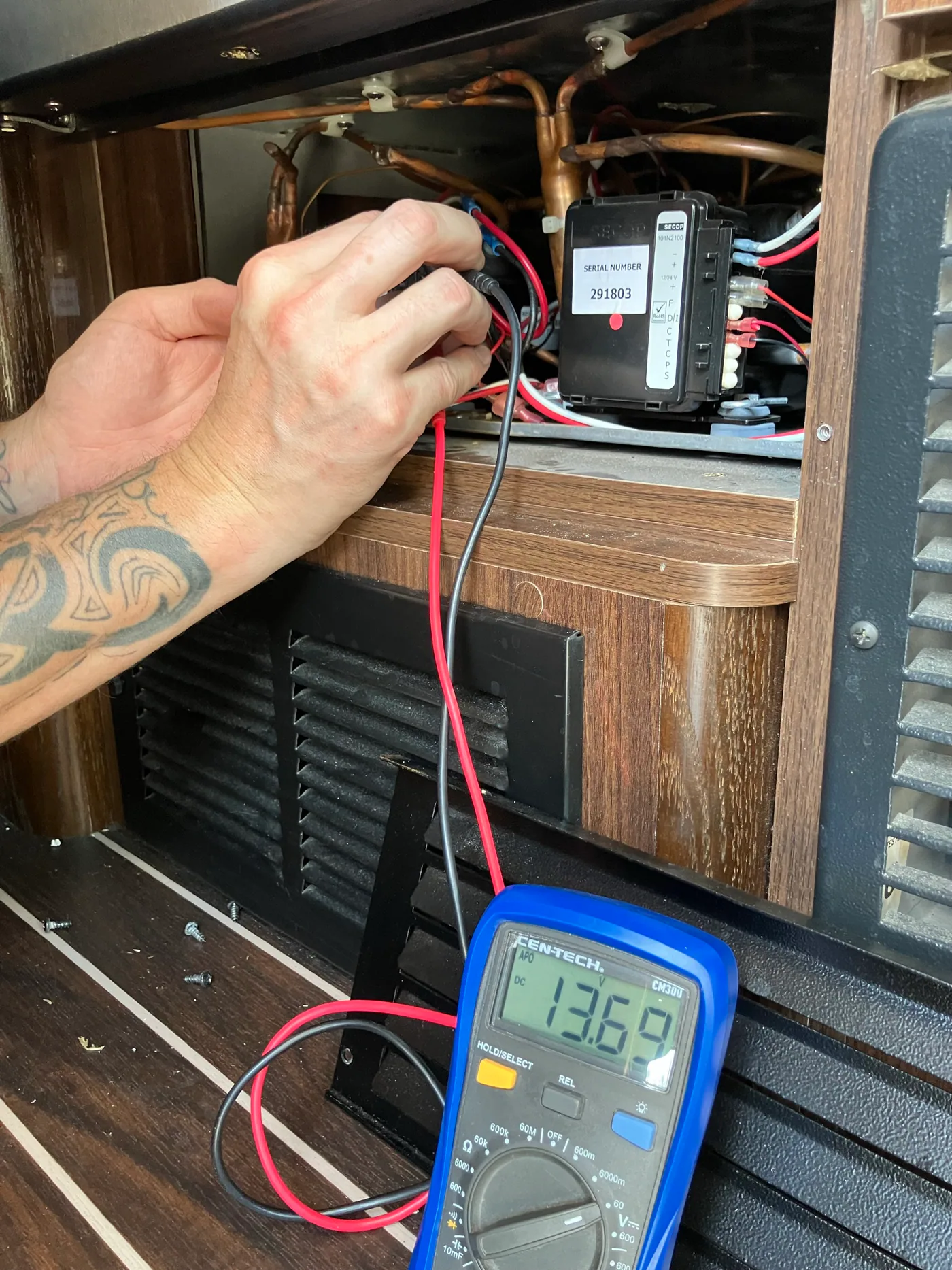
Measure voltage at the refrigerator while the compressor attempts to start. Long, undersized wiring and poor grounds can create a large voltage drop even when battery voltage looks acceptable elsewhere. Inspect the dedicated fuse and connectors for heat, and keep condenser ventilation clear. Low-voltage protection may be doing exactly what it was designed to do.
Residential refrigerator checks
Test the outlet and determine whether it is supplied by shore power, generator, inverter or an automatic transfer path. Check inverter errors and battery state. If clean 120V power reaches the appliance, continue with the refrigerator manufacturer’s diagnostics rather than RV electrical troubleshooting.
First identify the refrigerator type
RV refrigerators are not all diagnosed the same way. A propane/electric absorption refrigerator needs heat, gravity and rear ventilation. A 12V compressor refrigerator needs stable battery voltage, wiring capacity and condenser airflow. A residential refrigerator needs 120V power or inverter pass-through. Before replacing parts, find the model label and confirm what type of refrigerator is installed.
Absorption refrigerator checklist
| Clue | Likely area | First check |
|---|---|---|
| Works on propane, not electric | 120V heat source | Rear outlet, breaker, element and control power |
| Works on electric, not propane | LP ignition | Propane supply, burner area, check light |
| Freezer cold, fridge warm | Box airflow or thermistor | Fins, fans, frost, gasket and loading |
| Warm on both sources | Ventilation, leveling or cooling unit | Rear airflow and dangerous ammonia/yellow residue signs |
Rear ventilation matters more than many owners expect
An absorption refrigerator removes heat through the rear compartment. If the lower side vent, roof vent or upper side vent is blocked, cooling drops fast in hot weather. Leaves, nests, missing baffles, poor installation gaps and direct sun can all hurt performance. The refrigerator may be making heat normally but failing to reject it outside the RV.
Give the refrigerator a fair test
Use a thermometer in the freezer and food compartment. Do not judge by touch or by the display light. Pre-cool the refrigerator, avoid loading warm groceries right before travel, keep doors closed and give it several hours to stabilize. Absorption units recover slowly compared with household refrigerators. A warm fridge after a hot travel day is not always a failed cooling unit.
Danger signs are different from performance complaints
Ammonia smell, yellow powder, boiler-area overheating, scorching, repeated lockouts with soot, or signs of a cooling-unit leak are stop-use symptoms. Do not keep operating the refrigerator to see whether it improves. Refrigerator fires and cooling-unit failures are rare compared with normal performance complaints, but they are serious enough to treat carefully.
Related refrigerator pages
- RV refrigerator freezer cold but fridge warm
- RV fridge not cooling in hot weather
- RV fridge check light on
- RV fridge works on propane but not electric
- How long will an RV battery run a 12V refrigerator?
Narrow it by refrigerator type and energy source
The appliance walkthrough asks the few questions that matter most.
Diagnose refrigerator problem →Call a professional for
Gas-pressure adjustment, burner or valve service, ammonia or yellow residue, repeated overheat codes, damaged wiring, failed compressor or any sealed refrigeration repair.
Do not skip food safety
If the refrigerator is warm, the first decision is whether the food is safe, not whether the cooling unit can be saved. Use appliance thermometers in the freezer and food compartment. If food has been warm for an unknown amount of time, treat it conservatively. Repair diagnosis can wait; food safety cannot.
Thermistor and loading checks
On many absorption refrigerators, a thermistor clipped to the cooling fins tells the control how cold the food compartment is. If the thermistor is loose, misplaced or covered with frost, temperatures can drift. Interior airflow also matters. Packing food tight against the fins or blocking small circulation fans can leave the freezer cold while the food compartment stays warm.
When ventilation fans help
Rear ventilation fans can help in hot weather when installed correctly, but they do not fix a failed cooling unit, blocked burner or bad heating element. If fans help dramatically, that is a clue that heat rejection behind the refrigerator is marginal. Look for blocked vents, missing baffles, direct sun and installation gaps before assuming the refrigerator itself is worn out.
Sources and review notes
Model-specific safety notices, leveling limits and fault-code procedures from the installed refrigerator manufacturer always take priority. Check whether the appliance is subject to any manufacturer service campaign or recall.