A propane furnace rated at 30,000 BTU/hour input uses about 1.4 pounds of propane per hour while the burner is lit. With 20 pounds available, that is roughly 14 hours of continuous burning, or 29 elapsed hours if it burns half the time. These are fuel-only estimates, before other appliances and a reserve.
The missing piece in most “how many days will a tank last?” answers is how often the burner runs. Half an hour of burning in every hour uses half as much propane as continuous firing. Outside temperature, wind, insulation and the temperature you want inside all affect that run time.
This guide covers conventional propane RV furnaces. Electric heaters, heat pumps and diesel heating systems need different calculations.
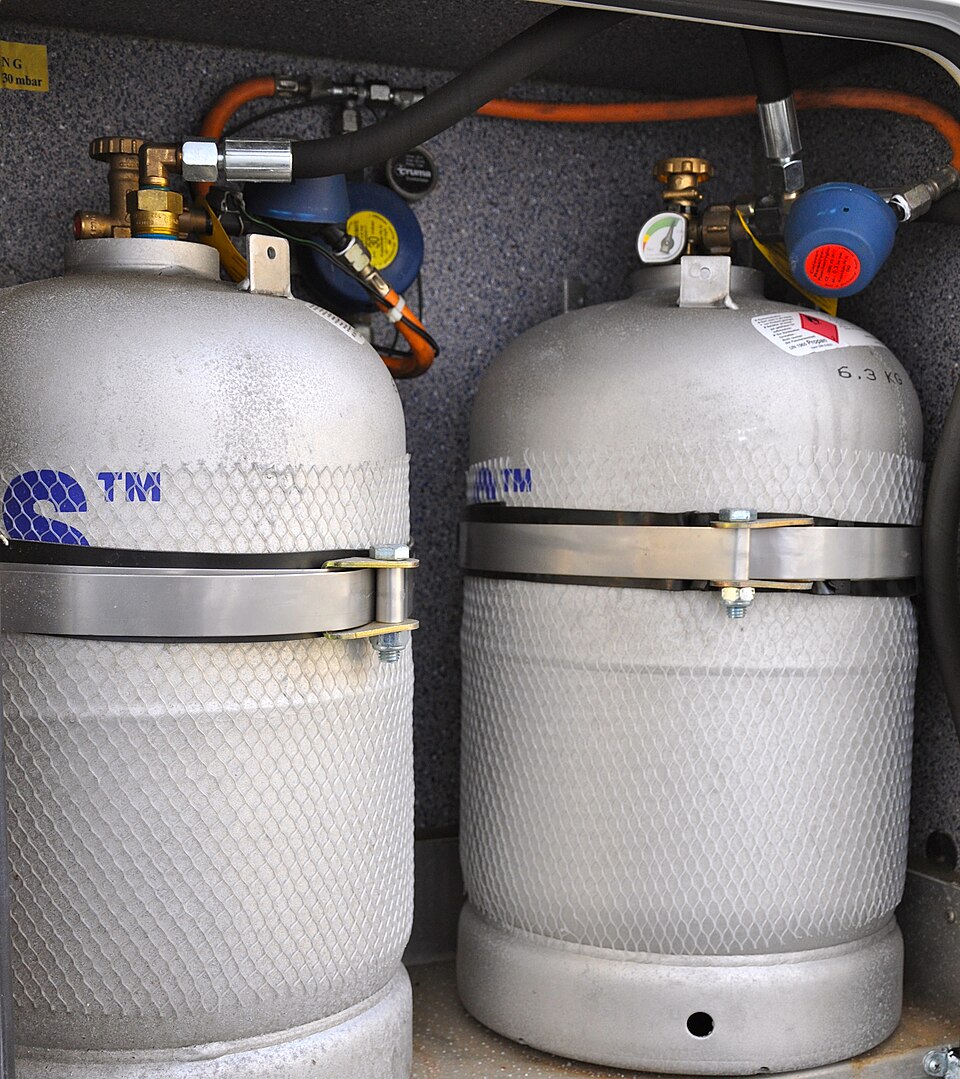
Photo: “LPG tanks” by Tasma3197, CC BY-SA 3.0. Reduced-resolution copy; no content edits.

Start with the furnace’s input rating
Find the model number and its BTU/hour input in your manual or on a safely accessible data label. You do not need to open the burner compartment. For example, Suburban lists the SF-20FQ at 20,000 BTU/hour input. Use your own model’s number.
Input describes the fuel energy going into the furnace. Output describes the heat delivered after losses. Using the output rating in a fuel calculation understates consumption; applying an efficiency adjustment to the input rating again counts the loss twice.
Input BTU/hour × burner-on hours ÷ 21,600
The rounded planning value of 21,600 BTU per pound comes from propane’s heating value. The Propane Education & Research Council’s Technical Pocket Guide lists approximately 21,548 BTU per pound and 91,502 BTU per U.S. gallon. Actual trip planning needs a wider margin than that rounding difference.
How long will a 20 lb propane tank run an RV furnace?
Here are calculated examples with 20 pounds of propane actually available. The last column assumes the burner runs 30 minutes out of every hour. It does not predict how often your furnace will cycle.
| Input rating | Pounds per burner hour | 20 lb: continuous burning | 20 lb: burning half the time |
|---|---|---|---|
| 20,000 BTU/h | 0.93 lb | 21.6 hours | 43.2 hours |
| 25,000 BTU/h | 1.16 lb | 17.3 hours | 34.6 hours |
| 30,000 BTU/h | 1.39 lb | 14.4 hours | 28.8 hours |
| 35,000 BTU/h | 1.62 lb | 12.3 hours | 24.7 hours |
| 40,000 BTU/h | 1.85 lb | 10.8 hours | 21.6 hours |
What about a 30 lb cylinder? With 30 pounds available, multiply the 20-pound results by 1.5. A 30,000-BTU furnace gets about 21.6 burner hours, or 43.2 elapsed hours at a 50% burner duty cycle. Two cylinders containing 20 pounds each double the 20-pound numbers, provided both are available to the system.
Those totals are not refill deadlines. Cooking, a propane water heater and an absorption refrigerator operating on gas draw from the same supply. Leave fuel for them and for a colder night than expected.
A “20 lb tank” may not contain 20 pounds
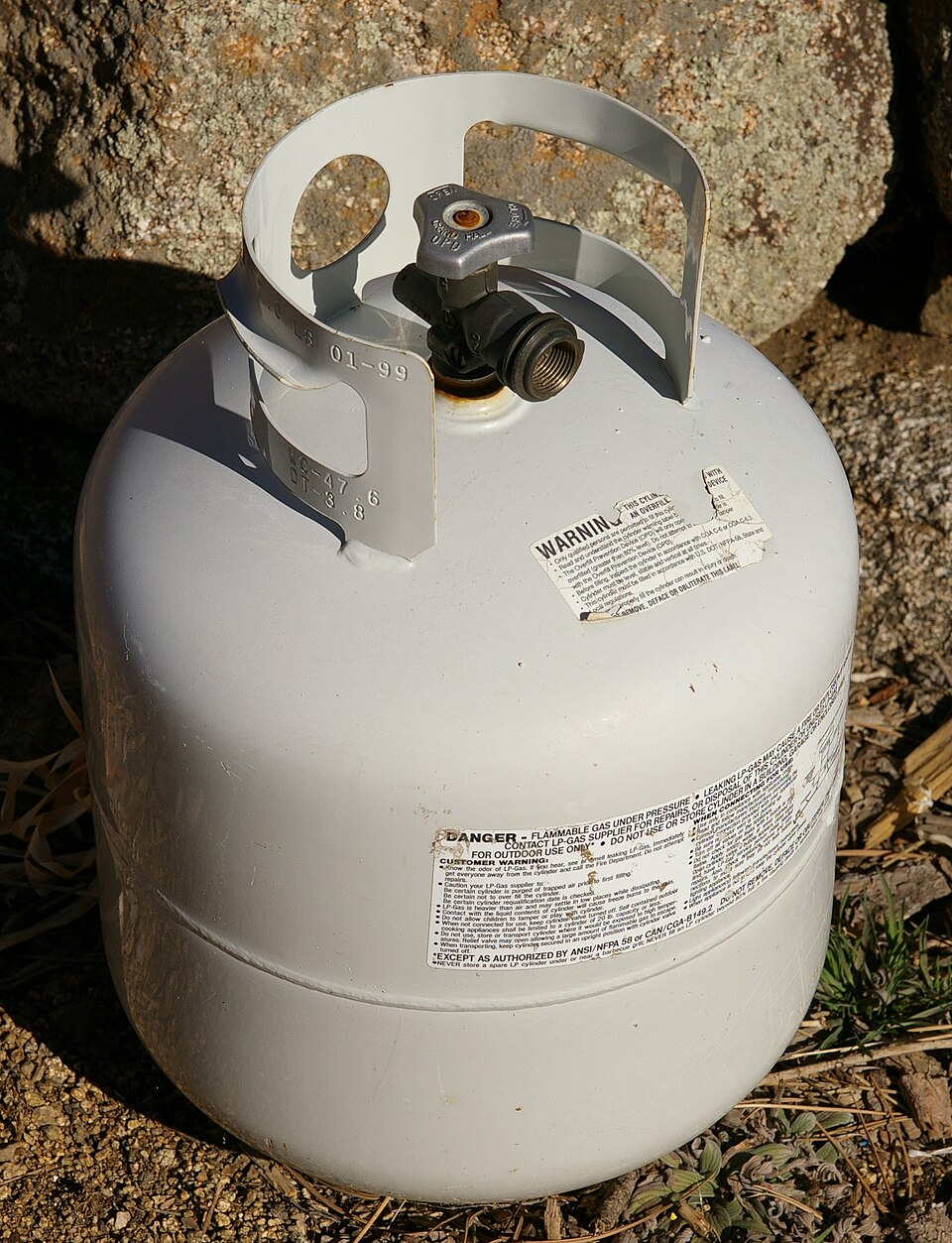

Read the exchange label or refill receipt. Blue Rhino states that its tanks contain 15 pounds of propane. At the same furnace setting, 15 pounds lasts 25% less time than 20 pounds.
For the 30,000-BTU example, that changes the half-time estimate from 28.8 to 21.6 elapsed hours. Previous cooking or heating shortens it further.
The steel cylinder’s weight is not fuel. Likewise, a built-in motorhome tank’s labeled capacity and a gauge reading are not automatically pounds of propane remaining. If you cannot establish the amount, ask the propane supplier rather than planning a freezing night around the tank’s nameplate size.
Work through a ten-hour night
Suppose your furnace is rated at 30,000 BTU/hour input and you expect ten hours of heating:
- Burner on half the time: 30,000 × 5 ÷ 21,600 = about 6.9 lb.
- Burner on 80% of the time: 30,000 × 8 ÷ 21,600 = about 11.1 lb.
That is more than four extra pounds in one night without changing the furnace. These are two scenarios, not claims about a particular outdoor temperature. Watch several normal cycles during a representative evening, then revise the estimate if it gets colder or windier.
Count burner time, not simply fan noise. The blower can run before ignition and after the burner shuts off. Do not remove a cover or get close to the hot exhaust to time it. If you cannot distinguish the stages safely, treating all blower time as burner time gives a more conservative fuel estimate.
Reduce heat loss without starving the furnace
- Use a comfortable lower thermostat setting and suitable bedding. Protect occupants and plumbing; there is no universal safe overnight setpoint for every RV.
- Close doors promptly and use window coverings as their manufacturer permits. Keep required ventilation, exits and appliance clearances open.
- Keep return-air openings and intended warm-air outlets clear of rugs, bags and bedding. Do not block ducts to force heat into another room.
- Arrange service for damaged ducts, soot, delayed ignition or erratic cycling. The Suburban operation guide explains its airflow and service requirements; follow your installed model’s manual.
If a room stays cold despite long heating cycles, start with the furnace cycling guide. Turning the thermostat higher cannot repair a disconnected duct.
Fuel remaining does not guarantee usable heat
Cold temperature and a low liquid level reduce a container’s ability to supply propane vapor. PERC describes this in the vaporization section of its technical guide. A weak supply in cold weather is not proof that the furnace needs a new control board. Have a qualified propane technician check persistent supply trouble; never improvise a flame or heater to warm a cylinder.
The blower and controls also need electrical power. Check your furnace battery-runtime plan alongside your fuel estimate. A full cylinder cannot overcome a depleted house battery.
Leave the RV and move away from the suspected leak. Do not operate switches, start the engine or generator, or use a phone inside. From a safe location, call the propane supplier or emergency services. For a CO alarm, get everyone into fresh air and call emergency services. Re-enter only when responders say it is safe. See PERC’s emergency instructions.
Two common fuel-planning questions
Does plugging into shore power stop propane use?
No. A conventional propane furnace still burns propane when the RV is plugged in. Shore power can support its electrical side through the RV’s charging system; it does not turn the burner into an electric heating element. A separate heat pump or electric heater is a different appliance.
Can I use the stove or oven when the furnace runs out?
Do not use cooking appliances for space heating. If dependable heat becomes uncertain, arrange a safe heated place to stay and a refill or repair. Keep working smoke, propane and CO alarms in service according to their instructions.
Before your next cold-weather trip
Write down your furnace input rating, fuel actually available and a realistic overnight run-time range. Add other propane loads, keep a reserve and locate a refill stop before arriving late at camp.
- Test the furnace before the first cold night
- Check heat, water and power for cold-weather camping
- Find an RV service provider
Calculations are RV Solver planning examples, not measured performance tests or guaranteed run times. Manufacturer and propane-supplier sources are linked beside the relevant guidance. Published October 29, 2026. Read our editorial policy.